RELAXATION BEFORE SURGERY: The Physiology of Calm
Introduction: Stress is Inflammatory
Here's what happens when you're anxious about surgery: your body floods with cortisol and adrenaline. Your immune system shifts toward inflammatory mode. Your nervous system stays in "fight or flight." Blood flow redirects away from digestion and healing, toward muscles and heart. Sleep fragments.
This isn't just uncomfortable—it's physiologically counterproductive. You're asking your body to prepare for surgery while simultaneously priming it for threat.
The good news? This is completely reversible. Relaxation isn't indulgent before surgery—it's active recovery preparation. When you activate your parasympathetic nervous system (your "rest and digest" mode), you reduce inflammation, improve pain tolerance, and prime your body for better surgical outcomes.
This blog explores the science of relaxation and how to use it strategically before your surgery.
The Inflammation-Stress Connection
Psychological stress triggers inflammation through multiple pathways:
Cortisol dysregulation: Chronic preoperative anxiety keeps cortisol elevated. While acute cortisol is anti-inflammatory, persistently elevated cortisol impairs immune regulation, allowing inflammatory markers (IL-6, TNF-α, CRP) to rise.
Sympathetic overdrive: Constant activation of your sympathetic nervous system (stress response) shifts your immune system toward pro-inflammatory Th17 cells and away from anti-inflammatory regulatory T cells.
Reduced vagal tone: Your vagus nerve (the main parasympathetic pathway) actively suppresses inflammation. When you're stressed, vagal tone decreases—and inflammation increases as a result.
Practical consequence: Patients with high preoperative anxiety show elevated inflammatory markers at surgery, predicting slower wound healing, more infection risk, and prolonged pain. Conversely, patients who actively manage stress show lower inflammation perioperatively and better outcomes.
Relaxation directly reverses this.
Even 10-15 minutes daily of parasympathetic activation measurably reduces inflammatory markers within days.
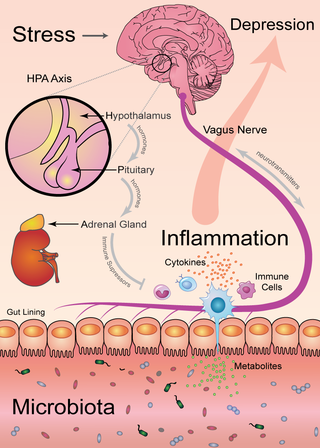
Impact of stress on inflammation, leaky gut and mental health (https://www.psychologytoday.com/za/blog/mood-microbe/201911/stress-inflammation-and-microbes-moody-trinity
How Relaxation Reduces Pain
Pain is not purely sensory. It's modulated by your nervous system state. The same surgical stimulus produces different pain experiences depending on whether you're stressed or calm—this is neurobiology, not psychology.
Gate Control Theory: Pain signals travel through your spinal cord via a "gate." When your parasympathetic system is active (you're calm, breathing slowly), this gate partially closes—pain signals are dampened. When you're in sympathetic mode (stressed, breathing fast), the gate opens—pain signals flow freely.
Descending Pain Inhibition: Your brain actively suppresses pain signals when you feel safe and in control. This system is strongest when parasympathetic tone is high and cortisol is low.
Endogenous Opioids: Relaxation increases your body's own pain-relieving molecules (endorphins, enkephalins, endocannabinoids). These are more available when you're calm than when you're stressed.
Practical outcome: Patients who practice relaxation preoperatively report 20-30% less post-operative pain and require fewer pain medications. This isn't placebo—it's measurable nervous system physiology.
---
Activating Your Parasympathetic Nervous System
Your parasympathetic system isn't activated by willpower or positive thinking. It'sh activated by specific, measurable physiological inputs. Here's how:
1. Slow, Diaphragmatic Breathing
The mechanism: Slow breathing (5-6 breaths per minute, vs. typical 12-16) activates the vagus nerve directly. This is the most reliable way to shift nervous system state within minutes.
How to do it:
- Inhale through nose for 4 counts
- Hold for 4 counts
- Exhale through mouth for 6 counts (longer exhale = stronger parasympathetic effect)
- Repeat for 5-10 minutes daily, ideally twice daily pre-op
Evidence: 10 minutes of slow breathing reduces cortisol, lowers heart rate, increases heart rate variability (a marker of parasympathetic strength), and measurably reduces anxiety. Effects are immediate.
Pre-op timeline: Start 2-4 weeks before surgery. By surgery day, your nervous system will be more responsive.
2. Progressive Muscle Relaxation (PMR)
The mechanism: Systematically tensing and releasing muscle groups trains your nervous system to recognize the difference between tension and relaxation. Over time, your "resting tone" becomes genuinely relaxed.
How to do it:
- Tense a muscle group (e.g., fists) for 5 seconds
- Release and notice the sensation for 10 seconds
- Move through: hands, arms, face, jaw, shoulders, chest, stomach, legs, feet
- Full session takes 15-20 minutes
Pre-op timeline: Start 4 weeks before surgery for maximal benefit, though 2 weeks shows measurable effect.
3. Guided Visualisation and Imagery
The mechanism: Your brain's sensory cortex doesn't distinguish vividly imagined experiences from real ones. When you visualise being calm, safe, and healing well, your body produces the physiological correlates of that state: lower cortisol, lower inflammation, increased parasympathetic tone.
How to do it:
- Find a quiet space
- Close eyes
- Visualise a place where you feel completely safe (beach, forest, home)
- Engage all senses: what do you see, hear, smell, feel, taste?
- Spend 10-15 minutes in this space
- Open eyes slowly
Surgical-specific version:
- Visualise your surgery going smoothly
- See your surgical team as skilled and caring
- Feel your body healing efficiently post-op
- Imagine yourself at week 2-4 post-op, moving well, feeling strong
Pre-op timeline: Start 2 weeks before; daily practice is most effective.
4. Mindfulness Meditation
The mechanism: Mindfulness activates the prefrontal cortex (reasoning, calm awareness) and reduces amygdala activation (fear, threat detection). This shifts your baseline nervous system state toward parasympathetic dominance.
How to do it:
- Sit comfortably
- Focus on breath
- When mind wanders (it will), gently return attention to breath
- No goal other than observing without judgment
- Start with 5-10 minutes; build to 15-20
Evidence: 8 weeks of daily mindfulness reduces anxiety, pain sensitivity, and inflammatory markers. Even 2 weeks shows measurable benefit.
Pre-op timeline: Start 4 weeks before for best effect.
5. Yoga (Gentle, Yin, or Restorative)
The mechanism: Gentle yoga combines slow breathing, muscle relaxation, and parasympathetic activation. Restorative yoga (supported poses held for 5+ minutes) is particularly effective pre-op.
Why not vigorous yoga? High-intensity exercise pre-op can increase cortisol temporarily. Gentle or restorative is preferable in the final 2-4 weeks before surgery.
How to do it:
- 20-30 minute restorative yoga session, 2-3x weekly pre-op
- Focus on supported forward folds, gentle twists, and resting poses
- Breathing should be slow and easy throughout
Evidence: Restorative yoga reduces anxiety and pain more effectively than general yoga for surgical patients.
Pre-op timeline: Start 4 weeks before; continue until surgery day.
Integration: Relaxation + Nutrition + Movement
Relaxation doesn't replace the other pillars—it amplifies them:
- Relaxation + Sleep: Lower cortisol = better sleep quality. Practice relaxation at night to improve pre-op sleep.
- Relaxation + Nutrition: Parasympathetic activation improves digestion. Your body absorbs protein and micronutrients better when calm.
- Relaxation + Movement: You'll tolerate prehabilitation exercise better when baseline stress is lower. Relaxation also reduces muscle tension that might interfere with exercise.
- Relaxation + Social Support: Sharing relaxation practices with loved ones strengthens connection while reducing collective anxiety.
---
Your Pre-Operative Relaxation Protocol
Weeks 4-2 Before Surgery (Establishment Phase)
Daily:
- Slow breathing: 10 minutes (morning + evening)
- Progressive muscle relaxation: 20 minutes (2-3x weekly)
- Gentle yoga or stretching: 20-30 minutes (2-3x weekly)
- Mindfulness or visualisation: 10-15 minutes (daily or 4-5x weekly)
Total time commitment: 30-45 minutes daily
Expected outcome: Measurably lower anxiety, better sleep, reduced inflammation
Week 2-1: Before Surgery (Maintenance + Intensification)
Daily:
- Slow breathing: 10-15 minutes (morning + evening)
- Surgical visualisation: 10 minutes (daily)
- Continue yoga or gentle movement: 3-4x weekly
- PMR: 1-2x weekly if not done yet; optional if already established
Expected outcome: Peak parasympathetic tone, minimal anxiety, optimal inflammatory state
Day Before Surgery
- Slow breathing: 15 minutes (morning)
- Surgical visualisation: 10-15 minutes (afternoon)
- Gentle yoga or stretching: 20 minutes
- Slow breathing: 15 minutes (evening)
- Early bedtime with relaxation practice pre-sleep
Day of Surgery
- Slow breathing: 10 minutes (before leaving home)
- Last surgical visualisation at hospital (if time permits)
- Slow breathing in pre-op area (if anxious)
- Trust that your nervous system is primed for calm
Measurable Outcomes: What Changes
When you practice relaxation consistently pre-op, expect:
Nervous System:
- ✅ Lower resting heart rate (5-10 bpm reduction is common)
- ✅ Higher heart rate variability (marker of parasympathetic strength)
- ✅ Slower, easier breathing
Stress Hormones:
- ✅ 20-30% reduction in cortisol levels
- ✅ Lower adrenaline and noradrenaline
Inflammation:
- ✅ Reduced inflammatory markers (IL-6, TNF-α, CRP)
- ✅ Improved immune balance (more regulatory T cells)
Subjective Experience:
- ✅ Less anxiety and worry
- ✅ Better sleep quality
- ✅ Lower pain sensitivity
- ✅ More sense of control
Surgical Outcomes (from literature):
- ✅ 20-30% less post-operative pain
- ✅ Faster wound healing
- ✅ Reduced infection risk
- ✅ Lower pain medication use
---
Special Situations
If You're Already on Anxiety Medication
Relaxation doesn't replace medication—it complements it. Your medication lowers the "floor" of anxiety; relaxation practices further activate parasympathetic tone. The combination is more effective than either alone.
Continue your medication as prescribed. Relaxation will make it work better.
If You're Naturally High-Stress
Some people's nervous systems are "harder-wired" to stress. This doesn't mean relaxation won't work—it means you may need:
- Longer practice period (4-6 weeks vs. 2-4 weeks)
- Multiple techniques (don't rely on one alone)
- Consistency (daily, not sporadic)
- Professional support (therapist, meditation teacher) if helpful
If You Have Limited Time Pre-Op
Prioritise in this order:
1. Slow breathing (5 minutes daily is better than nothing)
2. Surgical visualisation (10 minutes daily, highly effective)
3. Gentle movement or yoga (2-3x weekly)
4. Progressive muscle relaxation (1-2x weekly)
Even abbreviated practice measurably reduces anxiety and inflammation.
---
The Evidence Base: Honest Assessment
The evidence for preoperative relaxation is strong:
✅ Multiple RCTs show anxiety reduction, pain reduction, and improved outcomes with various relaxation techniques
✅ Mechanism is clear: Parasympathetic activation → reduced inflammation → better healing → less pain
✅ Effect sizes are meaningful: 20-30% reductions in pain and anxiety are clinically significant
❓ Individual response varies: Some people respond dramatically; others see modest effects. Consistency matters more than single "perfect" session.
❓ Best approach unknown: No study has directly compared all five techniques above in the same surgical population. All are evidence-supported; the "best" one is whichever you'll actually do daily.
---
Final Thought
Surgery is physically stressful. Your body will handle that. But psychological stress amplifies the physical stress—it increases inflammation, worsens pain, and delays healing.
Relaxation isn't about being "zen" or pretending you're not nervous. It's about physiologically shifting your nervous system from threat-detection mode to rest-and-digest mode. Your parasympathetic system is always available. Relaxation techniques simply activate it.
Spend 30-45 minutes daily for 4 weeks activating your parasympathetic nervous system. By surgery day, you'll have:
- Lower baseline inflammation
- Better pain tolerance
- Stronger immune response
- Improved sleep
- Genuine sense of control
That's not luxury. That's active recovery preparation.
---
⚠️ MEDICAL DISCLAIMER
This blog is educational. If you have anxiety, depression, or panic disorder, discuss relaxation practices and any concerns with your GP or mental health provider. Relaxation complements but doesn't replace medication or therapy. Your surgical team should be aware of any mental health diagnoses or medications you're taking.
---
Ellard Health: Evidence-Based Preparation for Surgical Recovery
