PART 5: Practical Checklist For Women Preparing for Surgery
Pre-Surgery Planning
Hormonal Planning:
[ ] Check the date of your last period and calculate your cycle
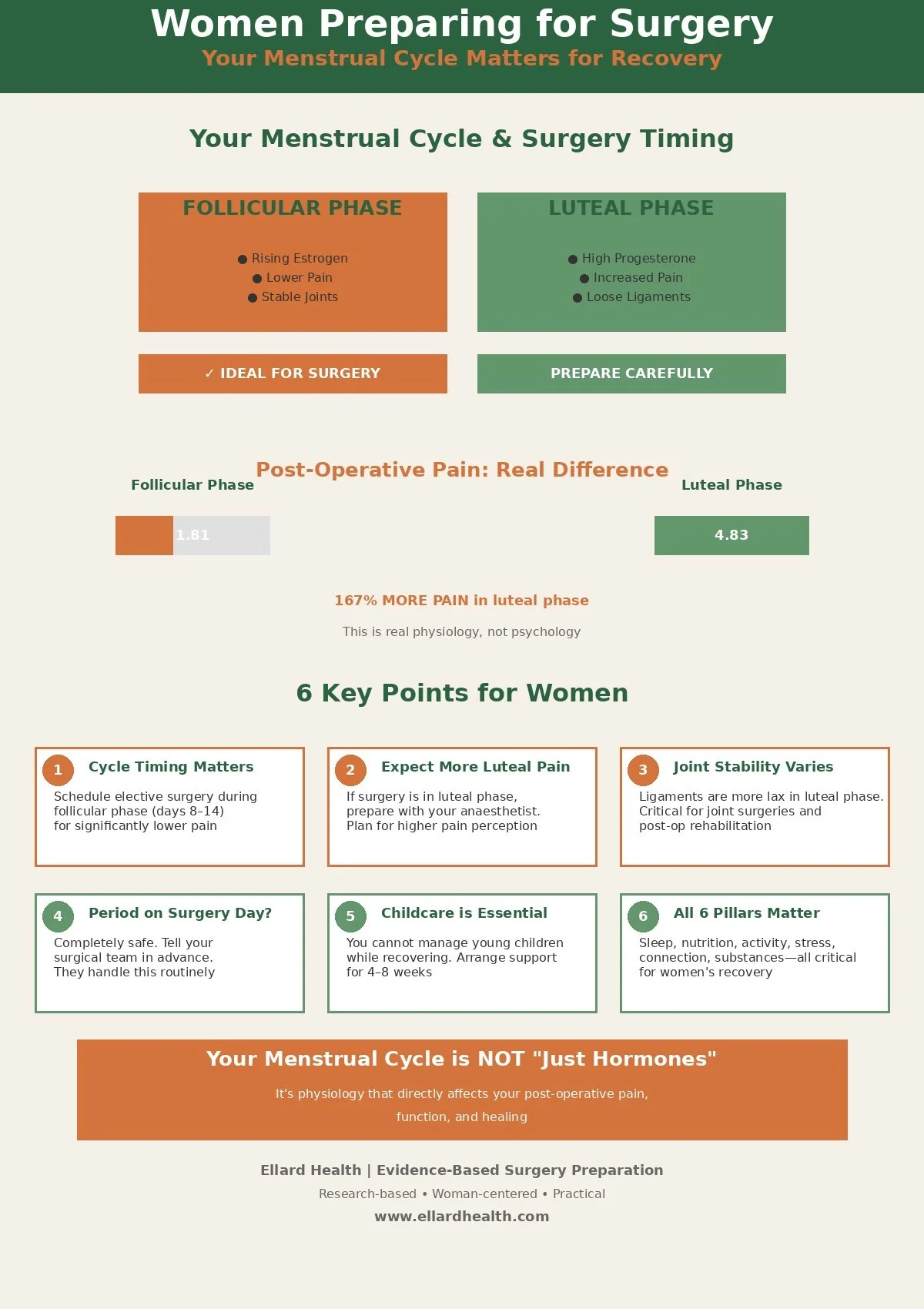
[ ] If your surgery is elective, discuss scheduling during follicular phase (days 8–14) with your surgical team
[ ] If surgery is luteal phase, have a conversation with your anaesthetist about pain management planning
[ ] If uncertain about cycle phase, ask your GP for a progesterone blood test to confirm
Communication with Your Team:
[ ] Tell your surgeon, anaesthetist, and GP if your period will be on surgery day
[ ] Mention any history of heavy periods or menstrual pain
[ ] Discuss hormonal contraception use (if applicable)
[ ] Discuss breastfeeding status (if applicable)
[ ] Ask about ligamental laxity considerations if you're having joint-related surgery
Childcare Planning:
[ ] Arrange childcare coverage for at least Weeks 1–4 post-op
[ ] Brief your children (age-appropriately) about your surgery and recovery
[ ] Arrange meal prep/delivery for Weeks 1–8
[ ] Plan for reduced household responsibilities
[ ] Arrange help with school runs, if applicable
Physical Preparation:
[ ] Follow the pre-operative optimisation plan (6 pillars from Ellard Health blogs)
[ ] If surgery is joint-related, focus on exercise during follicular phase
[ ] Discuss pre-operative physiotherapy with your team
Stock Up:
[ ] Menstrual products (if your period might arrive during recovery)
[ ] Comfortable, loose clothing for recovery
[ ] Any recommended post-operative supplies
Post-Surgery Management
Pain Management:
[ ] Be prepared for potentially higher pain if you're in luteal phase—ask for adequate analgesia
[ ] Track pain alongside your menstrual cycle; pain may naturally worsen during menstruation
[ ] Use the pain management strategies from Blog 5 (Stress & Mental Resilience) alongside medication
Activity Planning:
[ ] During follicular phase early recovery: joints are more stable; you may feel stronger
[ ] During luteal phase early recovery: joints have increased laxity; avoid aggressive movements
[ ] Discuss menstrual cycle timing with your physiotherapist when returning to exercise
Hygiene & Menstruation:
[ ] If your period arrives during recovery, use pads (not tampons) for the first 2 weeks post-op (especially if your surgery involved abdominal/pelvic work)
[ ] Stay hydrated (menstrual + post-op fluid loss increases dehydration risk)
[ ] Don't hesitate to ask hospital staff for help with menstrual management if needed
Breastfeeding (if applicable):
[ ] Confirm with your team that planned painkillers are safe while breastfeeding
[ ] Experiment with breastfeeding positions early to find ones that don't strain your surgical site
[ ] Seek lactation support if positioning or pain is problematic
This is list is not exhaustive and should you wish to add your own tick boxes please feel free to do so
