4.Stop Counting, Start Noticing: Why Calories Aren't the Whole Story
If I had a pound for every patient who's told me they've "tried everything" to lose weight, I could retire to the seaside. Almost always, "everything" means some version of the same thing: eat less, count harder, try again. And when it doesn't work, they blame themselves.
So let's clear something up. It isn't a willpower problem. For most people, it's a strategy problem, and it starts with how we've been taught to think about calories.
The calorie myth
A calorie is a unit of energy. That part is true. But the idea that "a calorie is a calorie" and your body treats them all the same falls apart the moment food meets a real human body.
Different foods trigger different hormones, keep you full for different lengths of time, feed (or starve) the bacteria in your gut, and even cost your body different amounts of energy to digest. Protein, for example, uses up roughly a quarter of its own calories just being digested. Refined sugar barely makes your body work at all.
Where your calories come from shapes how much you end up eating, how you feel, and what your body does with that energy.
Why calorie restriction so often backfires
Cutting calories hard can work for a few weeks. Then the body fights back.
Your metabolism adapts. When you eat much less, your body gets thriftier and burns less energy. In one well-known study of contestants from a TV weight-loss show, their resting metabolism was still around 500 calories a day lower six years later.
Hunger gets louder. Hunger hormones rise and fullness hormones fall. Your body is trying to protect you from what it thinks is a famine.
You lose muscle, not just fat. Muscle keeps you strong, steady on your feet and metabolically healthy. Losing it is the opposite of what we want.
Food takes over your head. In the Minnesota Starvation Experiment of the 1940s, healthy young men on restricted diets became preoccupied with food, low in mood and irritable. Plenty of dieters will recognise that feeling.
The result is the familiar cycle: restrict, feel miserable, "fail", regain, repeat. That isn't a character flaw. It's biology doing its job.
Same calories, completely different body
Picture two ways of eating 2,000 calories.
Option 1: one fast-food blowout. A large burger meal with fries, a fizzy drink, a milkshake and a dessert. That's easily 2,000 calories, and it's often eaten in under 20 minutes.
Option 2: a full day of real food. Eggs and spinach for breakfast. Chicken thigh with a big lentil and vegetable salad at lunch. Salmon, roasted veg and chickpeas for dinner. Greek yoghurt, berries and a handful of nuts in between.
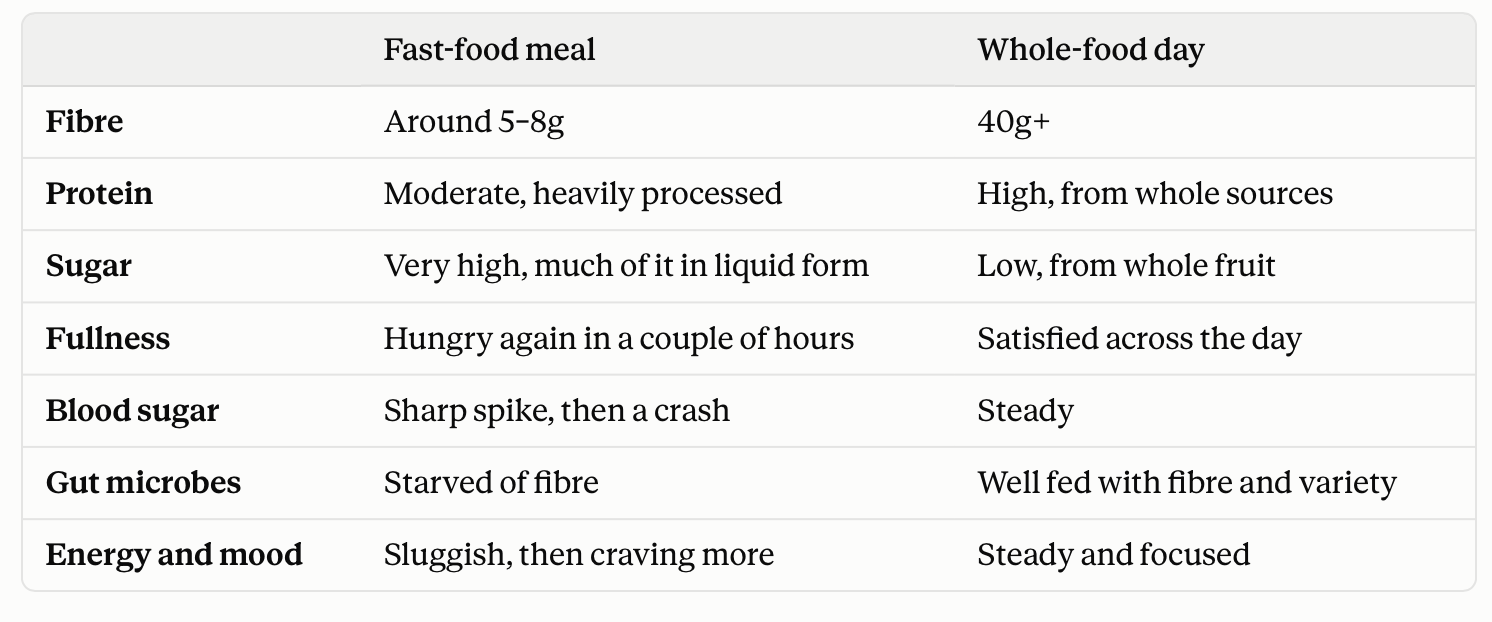
The numbers on the label are identical. What happens inside you is not.
The research backs this up. In a tightly controlled NIH study, people offered ultra-processed food ate about 500 more calories a day than when they were offered unprocessed food, without meaning to, and gained weight in just two weeks. The food itself was driving the overeating.
What to focus on instead
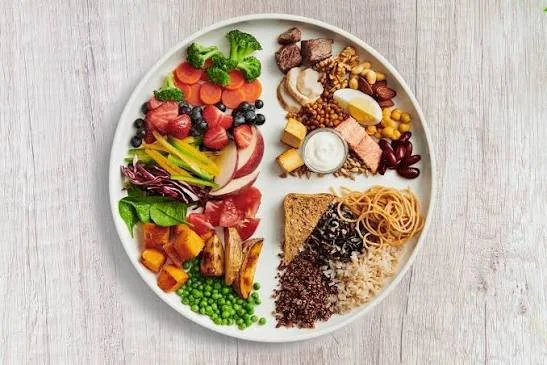
Recommended food plate - 50% fruit and Vegetables, 25% Protein and 25% complex carbohydrates
Eat whole foods, mostly. If your great-grandmother would recognise it as food, you're on the right track: meat, fish, eggs, vegetables, fruit, pulses, nuts, seeds, whole grains.
Cut back on ultra-processed food (UPF). These are foods with long ingredient lists full of things you wouldn't have in your kitchen, such as emulsifiers, flavourings and sweeteners. They're designed to be overeaten. You don't have to be perfect, but aim to make UPF the exception rather than the rule.
Keep sugar and refined carbs low. White bread, pastries, sweets and sugary drinks spike your blood sugar and leave you hungrier. Slow-release carbs from vegetables, pulses and whole grains behave very differently.
Put protein first. Build every meal around a good protein source. It keeps you full, protects your muscle and steadies your appetite.
Look after your gut. Your gut microbiome, the trillions of bacteria living in your digestive system, influences your appetite, mood, immunity and even your weight. Feed it fibre and variety: aim for lots of different plants each week (herbs, spices, nuts and seeds all count), plus fermented foods like live yoghurt, kefir or sauerkraut.
The four-week experiment
This is my suggestion: don't count a single calorie. Just eat this way for four weeks, then check in with your body.
At the end of the four weeks, ask yourself:
Fullness: Do I feel satisfied after meals? Am I snacking less?
Energy: How do I feel mid-afternoon?
Sleep: Am I falling asleep more easily and waking more refreshed?
Bowels: Am I more regular? (Yes, this matters, and your GP is not squeamish!)
Skin: Any change?
Mood and cravings: Is food taking up less headspace?
Strength: Are everyday things like stairs, carrying shopping or playing with the kids feeling easier?
Weight and waist: Has anything shifted? How do your clothes fit?
Notice that weight is just one line on that list. Your body gives you far richer feedback than a number on the scales, if you give it the chance.
Change the words, change the goal
One last thing, and it might be the most important. Pay attention to how you talk to yourself.
"I'm fat." "I need to be skinny." "I've been bad this week."
These words keep you stuck in shame, and shame is a terrible motivator. Try this instead:
"I want to be healthy."
"I want my body to be strong."
"I'm feeding myself well."
This isn't just positive thinking. When your goal is strength and health, every good meal counts as a win. When your goal is "smaller", you're always falling short.
Your body isn't a problem to be solved. It's the thing that carries you through your whole life. Feed it like you value it.
A quick note: if you have diabetes, especially if you take insulin or other glucose-lowering medication, speak to your GP before cutting carbs, as your medication may need adjusting. And if food or eating has been a struggle for you in the past, please reach out for support. You deserve help, not another diet.
