1. Supplements Before & After Surgery
Simple, Evidence-Based Advice for Better Recovery
WHY SUPPLEMENTS MATTER
The right nutrients at the right time genuinely improve your surgical outcome.
Research shows strategic supplementation can:
- Reduce post-operative pain by up to 25%
- Speed wound healing by 15-20%
- Lower infection risk by 25-30%
- Improve overall recovery quality
But timing is everything. Stopping supplements before surgery and restarting immediately after makes all the difference.

BEFORE YOUR SURGERY: FOOD FIRST
Focus on Nutritionally Dense Foods Rather Than Over Supplementing
In the weeks leading up to surgery, prioritise whole foods over supplements:
Protein
Essential for muscle and tissue repair
Sources: Eggs, chicken, fish, lean beef, Greek yoghurt, cottage cheese, legumes, nuts, seeds, tofu
- Target: 1.2-1.6 g per kg body weight daily
Vitamin C
Anti-inflammatory, helps with wound healing
Sources: Citrus fruits, strawberries, kiwi, peppers, broccoli, Brussels sprouts
Zinc
Zinc is a mineral involved in wound healing, immune function, and inflammation reduction. It's essential for cell proliferation and tissue regeneration. After surgery, plasma zinc drops 30-50% in the first 48 hours due to redistribution to the liver for acute-phase protein production.
Sources: Oysters, beef, pumpkin seeds, chickpeas, cashews, mushrooms
Iron
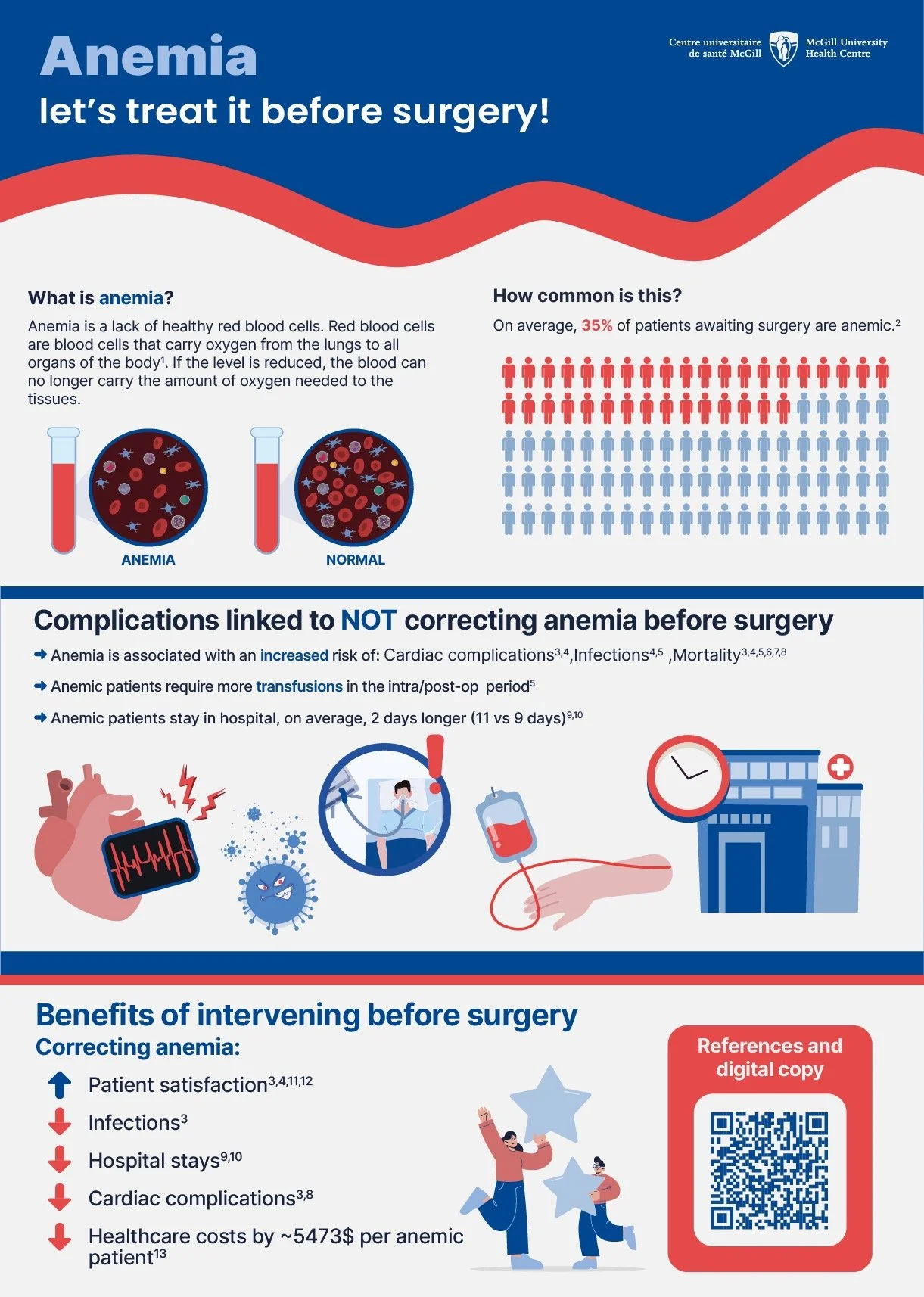
Iron supports red blood cell production and oxygen transport. Anaemia increases transfusion risk after surgery and impairs wound healing.
Sources: Red meat, poultry, fish, beans, lentils, spinach
Vitamin E
Supports immune function and skin healing
Sources: Sunflower seeds, almonds
Omega-3
Helps with reducing inflammation and protects cell walls throughout the body
Fatty fish (salmon, mackerel), walnuts, flaxseeds

SUPPLEMENTS BEFORE SURGERY
⚠️ Important:
Most surgical teams advise
stopping all vitamins and supplements 7-14 days before surgery
The focus before surgery is to maintain nutrition dense food and get protein levels up.
If you wish to take supplements, please do so but only up to 2 weeks before surgery - as some can interfere with anaesthesia and increase bleeding risk. Check with your team for specific guidance on your operation.
Important considerations: Iron and haemoglobin
Iron is essential for making blood cells (haemoglobin) which deliver oxygen to your cells. If levels are low it may impair your wound healing, energy levels and recovery.
During inflammation (for example tissue healing after surgery), iron is released from its stores to help in recovery. This will deplete your stores, which will be needed later on to build haemoglobin. It is therefore important that you get your levels checked 6-8 weeks before surgery, so that you have time to correct levels, aiming for >75mcg/dL.
If your levels are low it maybe worth discussing with your medical team to ensure that there are no other causes.
You will likely have your haemoglobin checked at the same time. These are the blood cells that deliver oxygen to cells and have an iron core.
If your haemoglobin is normal but iron is low then it is termed iron deficiency, however if your haemoglobin is low it is an iron deficiency anaemia.
Ideal levels: Haemoglobin >12-13 g/dL (depending on gender)
---
SUPPLEMENTS TO STOP BEFORE SURGERY
Stop these 7-14 days before surgery—they increase bleeding risk:
Garlic • Ginkgo biloba • Ginger • Ginseng • Fish oil (high dose) • Vitamin E (high dose >400 IU) • Saw palmetto • Feverfew • Dong quai • Turmeric/Curcumin (high dose)
Tell your surgical team everything you take. They'll confirm what to stop and when.
AFTER YOUR SURGERY: THE RECOVERY PROTOCOL
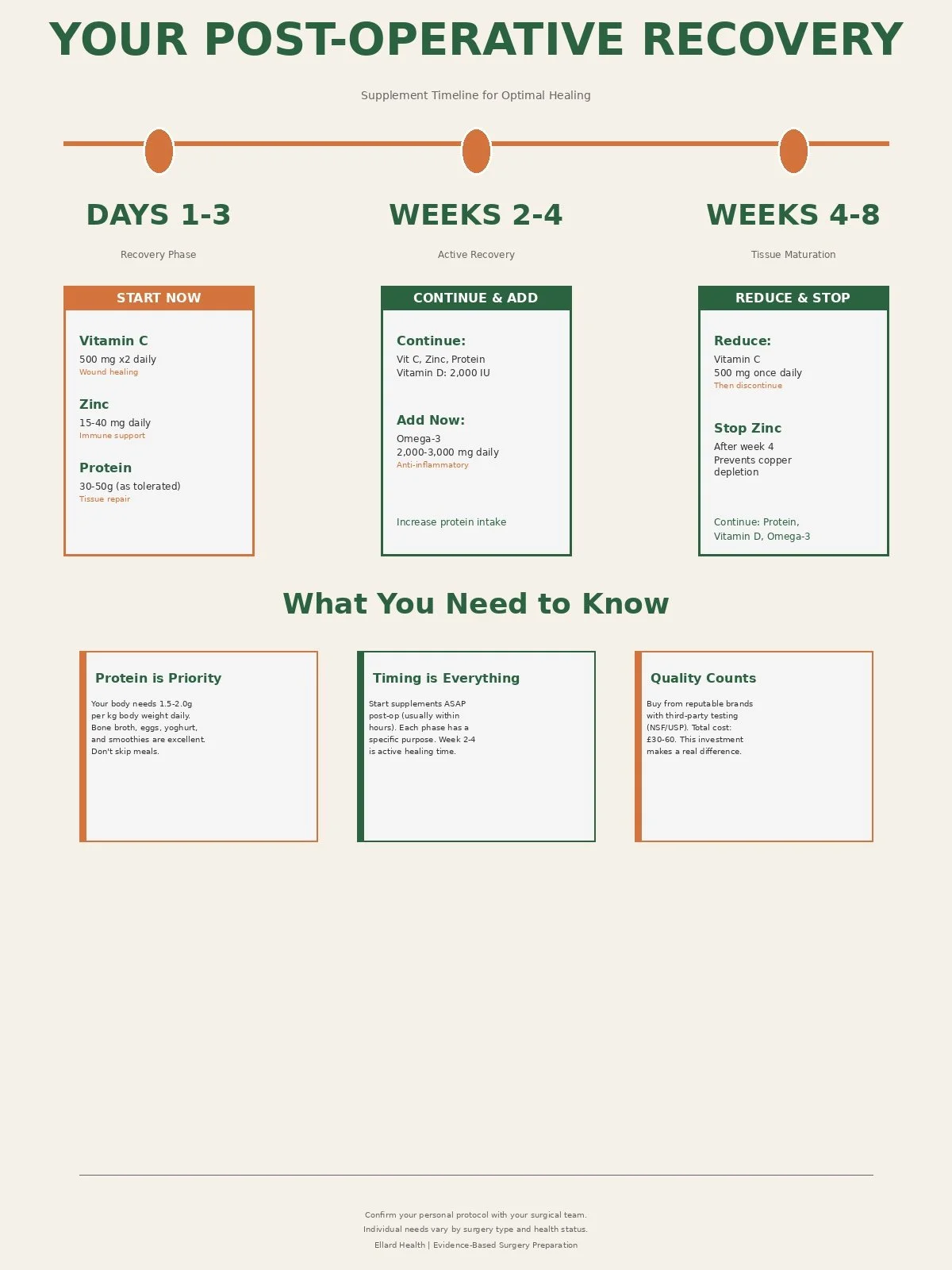
Days 1-3: Restart Key Supplements
As soon as you can take oral medications (usually within hours of surgery):
Vitamin C: 500 mg twice daily
Why: Supports wound healing and collagen synthesis
Zinc: 15-40 mg once daily
Why: Strengthens immune response and reduces infection risk
Protein: Start with whatever you tolerate (30-50g daily is fine)
Easy options: bone broth, soft eggs, yoghurt, protein smoothies, fish
---
Weeks 2-4: Active Recovery
Continue:
- Vitamin C: 500 mg twice daily
- Zinc: 15-40 mg once daily
- Protein: Aim for 1.5-2.0 g per kg body weight daily
- Vitamin D: 2,000 IU daily
Add:
- Omega-3: 2,000-3,000 mg daily (anti-inflammatory, supports healing)
- Collagen: 10-20g daily (if you started pre-op)
---
Weeks 4-8: Tissue Maturation
Continue everything above, but:
- Reduce Vitamin C to 500 mg once daily (then stop after week 4)
- Continue Zinc for full 4 weeks, then stop (prevents copper depletion)
- Protein gradually returns to normal needs
Optional: Continue collagen through week 12 for joint and scar healing.
SPECIAL SITUATIONS
Breastfeeding
All post-operative supplements are safe: Vitamin C, Zinc, Vitamin D, Omega-3, Probiotics. Discuss with your GP if concerned.
Diabetes
Monitor blood sugar (some supplements affect it). Zinc and Vitamin C are safe. Avoid ginseng.
On Blood Thinners (Warfarin, Rivaroxaban, etc.)
Stop all blood-thinning supplements. Vitamin C and Zinc are safe. Discuss fish oil with your GP.
Kidney or Liver Disease
Some vitamins need dose adjustment. Always discuss with your GP before supplementing.
PRACTICAL TIPS
Quality matters: Buy from reputable manufacturers (look for third-party testing). Avoid discount stores.
Typical cost: £30-60 for pre- and post-op supplementation combined. A small investment with measurable return on your recovery.
Storage: Keep supplements in a cool, dry place such as the fridge. Not the bathroom (humidity damages them).
WHAT TO TELL YOUR SURGICAL TEAM
Before surgery, give your anaesthetist and surgeon a simple list:
- Supplement name
- Dose
- How often you take it
- How long you've been taking it
They'll tell you exactly what to stop and when.
⚠️ MEDICAL DISCLAIMER
This guide is educational only and not a substitute for professional medical advice. Always consult your GP, surgical team, and anaesthetist before starting or stopping any supplements. Your individual needs depend on your health status, medications, and type of surgery.
---
Ellard Health: Evidence-based surgery preparation for better outcomes.
