Part 2: Ligamental laxity & How Your Cycle Affects Your Joints
What Is Ligamental Laxity?
Ligaments are tough, fibrous tissues that stabilise your joints. Ligamental laxity is when ligaments become more relaxed or "lax"—more mobile, less stiff.
This isn't a bad thing inherently. Some laxity is normal. But increased laxity means your joints are more mobile and potentially less stable, which increases injury risk in certain contexts.
Women have significantly more ligamental laxity than men. This is primarily due to hormonal differences, particularly estrogen.
How Estrogen & the Menstrual Cycle Affect Your Ligaments
During the follicular phase (low estrogen):
Ligaments are relatively stiff
Joints are more stable
Lower injury risk
During the ovulation phase (estrogen peak, around day 14):
Estrogen is at its highest
Ligaments become more lax
Knee laxity increases measurably
Joint stability decreases
Injury risk increases (this is when ACL injuries peak in female athletes)
During the luteal phase (high progesterone, moderate-to-high estrogen):
Ligamental laxity persists but may be less pronounced than at ovulation
Joint stability gradually improves as you approach menstruation
Beynnon et al. (2005) measured knee and ankle laxity across the menstrual cycle in young women and found that increased serum estradiol and progesterone levels were associated with increased ankle and knee joint laxity. Peak laxity occurred around ovulation (day 14) when estrogen peaked. American Journal of Sports Medicine, 33(8), 1298-1304.
What This Means For Your Surgery & Recovery
Pre-operatively (Before Surgery):
If your surgery requires you to do pre-operative physiotherapy or exercise preparation:
During follicular phase: Your joints are more stable. This is a good time for more demanding exercise.
During ovulation & luteal phase: Your joints have increased laxity. You need to be more careful about high-impact exercise, sudden directional changes, or heavy loaded movements that stress joints. Stick to controlled, stable movements.
This is especially important if your surgery involves joint-related issues (knee surgery, ACL repair, patellar instability, ankle surgery) or if you're doing weight-bearing exercise preparation.
Post-operatively (After Surgery):
After surgery, your physiotherapist will give you specific movement restrictions and a return-to-exercise timeline. The menstrual cycle timing of your post-operative rehabilitation matters.
Practical guidance for post-op rehabilitation:
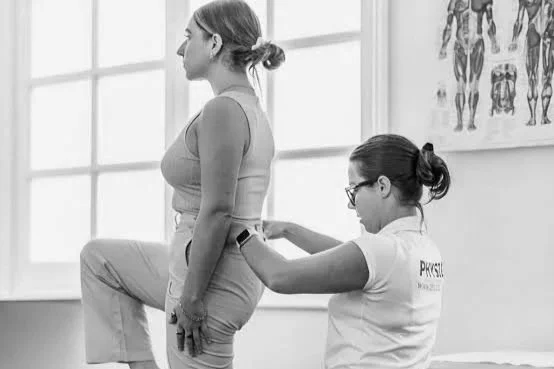
If you return to exercise during the follicular phase: Your ligaments are stiffer and more stable. You may feel stronger and more confident. This is a good phase for progressing exercise intensity or complexity.
If you return to exercise during ovulation or luteal phase: Your ligaments are more lax. Progress your rehab more cautiously. Don't rush high-risk movements or heavy loading. Wait until you cycle back to the follicular phase for aggressive progressions, if possible.
Talk to your physiotherapist about this. Many physios aren't aware of menstrual cycle effects on ligamental laxity, but it's worth explaining. A good physio can adjust your rehabilitation timeline to account for your cycle.
